Can You Really Make Money with a Food Blog?
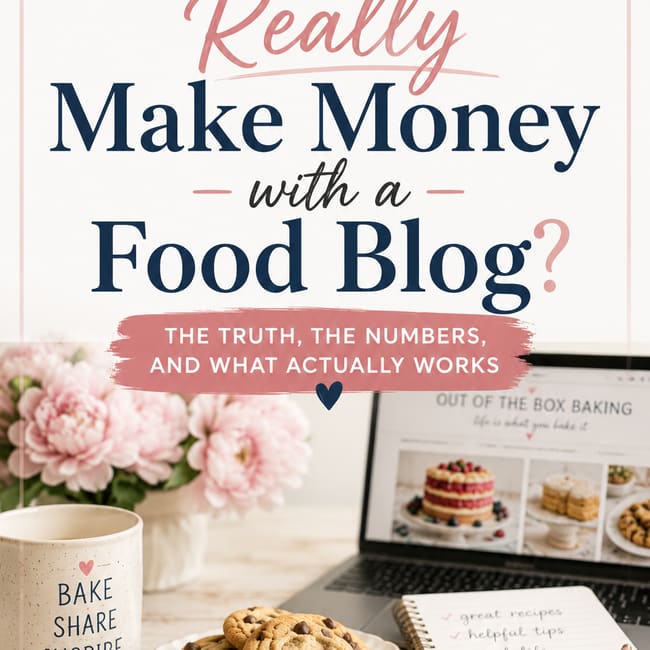
Wondering if you can really make money with a food blog? Here’s how I transitioned from exhausted cottage baker to full-time baking blogger—and why blogging helped me keep baking without burnout.

How Blogging Helped Me Keep Baking Without Burning Out
If you had told me back in 2013 that I would one day run a baking blog, I would have laughed at you.
Back in those days, I did spend a lot of time writing. . .books. Cozy mysteries. Romantic comedies. Devotionals. Lots and lots and lots of books. But a blog? Nope. Not even on my radar.
One thing was on my radar, though: baking.

I started my cottage baking business in 2013 on a wing and a prayer. It took a while to get my license with the state of Texas, but I managed it in due time and before you knew it, I was off to the races, baking up cakes, cookies, and cupcakes for the masses.
Okay, not the masses. More like my neighbors, friends from church, and family members. But you get the idea. I was a real baker. A paid baker.
My Cottage Bakery Journey

Only, a year or two into the process I started to regret it. Not because my passion for baking waned, but because I was exhausted.
I can’t tell you how many all-nighters I pulled. . .usually the night before a big holiday. Like Valentine’s Day. Or Christmas. Or Easter. Not the time you want to be exhausted from being on your feet all night. But it happened more times than I can count.
The heartbreaking part? I usually didn’t have anything special for my grandkids on those days.
- No Easter baskets.
- No Valentine’s cards.
- No back-to-school goodies.
Why? Because I was too busy baking for paying customers.
- Like those brides who wanted me to make their wedding cakes.
- Or the moms-to-be who needed baby shower cakes and cookies.
- Or the graduates who needed hand-painted cookies.
I was happily serving all of them. . .
But my own family was getting the short end of the stick. And if I’m being honest, even though I’m a night owl, many baking mistakes were made in the wee hours of the night due to exhaustion.
And the pressure to offer the perfect cake to a customer? Well, it was a lot.
There was that time a wedding cake toppled on the day of the wedding.
Oh, and that other time when I made—and remade—a cake multiple times because I couldn’t get it leveled.
And that other time when I completed a cake, sent a picture to the customer, and she hated it. . .so I started over at 3:00 in the morning. I daily faced:
- The pressure of perfection.
- The physical burnout.
- The emotional stress.
- The cake disasters.
It all added up to one painful reality:
Something had to change.
Worst of all was the realization that I loved to bake, but hated the pressure of producing the perfect baked good every single time.
Those days were hard. And (just keeping it real here), I was always too hard on myself. I never really thought my work was worthy of pay.
Which is why I rarely charged enough. Which, sadly, led to losing money instead of making it—a common problem for cottage bakers.
Discovering Food Blogging

Jump ahead several years. I was still plugging away at the books but rarely baking for customers anymore. The stress was just too high.
Then one day a good friend messaged me on Facebook to ask if I might be interested in starting a baking blog.
Honestly? I was clueless.
Also, I wasn’t particularly interested in a new venture at that point and told her so. Only, she followed up with a comment about how much money she was making on her food blog. And that got my attention.
Wait. There’s really money to be made?
Turns out. . .there is. And if you lay a solid foundation, do the work, and put out steady posts, it might not be as difficult as you think to get your food blog up and running, too.
Now, let me pause here and say something important: Food blogging is not a get-rich-quick scheme. It takes time, consistency, patience, and a willingness to learn.

I didn’t start making substantial income overnight. But over time, steady traffic, strong content, social media marketing, and ad revenue began to build into something sustainable.
I didn’t stop baking. I just found a different way to share my passion.
One thing remained consistent from the beginning: I always studied the craft. And when I say I studied, I really mean it. I watched a zillion tutorials. I baked recipes over and over and over until I got them just the way I wanted them.
I had (and continue to have) a constant desire to improve my skills in the kitchen.
Which, if you think about it, makes me the ideal blogger.
- I know the craft.
- I know how to write.
- I have a passion for the subject matter.
Okay, so I didn’t realize how different blogging is from book writing, but that’s a story for another day. My point here is that you—yes, you—can start a food blog, too.
No, really. You can. And it’s not as hard as you might think.
Learn the Business of Blogging

Perhaps you read that and think, “Wait, I can make a living blogging? But I’m not a writer.”
Maybe you haven’t published books. Maybe you don’t know how to put together a blog post. No worries. You can learn, just as thousands who’ve gone before you have.
I started my Out of the Box Baking blog in 2022, knowing full well that I would need to quickly get sessions (similar to page views) of over 50,000 a month in order to be considered by one of the bigger ad companies.
Did I mention the ad companies? Yeah, those pesky ads you see running up and down my page are where a large portion of the income comes from. But convincing an ad company that you’re a good fit is tricky because they’re only interested in bloggers with a steady stream of readers. And I wasn’t sure I could pull that off.
I was blessed to have the help of a couple of great friends. They guided me through the whole “How do I even build a blog, anyway?” phase. Also, (brutal honesty), I knew very little about tech stuff.
- Like WordPress.
- Or hosting companies.
- Or SEO.
I would have to start at the very beginning.
Very humbling for a multi-published author to admit, but it’s true. But I was willing and able.
So, in the same way I learned the baking craft, I set out to learn blogging. I watched so many videos, it made my head spin.
First Things First. . .
I started with the name: Out of the Box Baking.

It made sense because my “schtick” is taking a boxed cake mix and doctoring it to become something better.
Once I established the name, I needed a hosting company. I went with BigScoots, but there are many great hosting companies out there.
I didn’t have the funds to hire a designer, so I had to learn the design part myself. This was, by far, the toughest part for me. But with the help of my generous friends (Debby and Julie) from Southern Home Express and Back to My Southern Roots, I figured out enough to get the home page up and running.
Now I just needed to choose my recipes. And here’s where I made one of my first mistakes. I decided to blog about recipes that I loved when, in reality, I should have been blogging recipes people were actually searching for.
Which leads me to the next part of my journey. . .
Why SEO Matters for Food Bloggers

When I say I had no idea what SEO was, I genuinely mean it. I knew nothing about how search engines worked from the blogger’s point of view. I didn’t realize my recipes needed to be filled with keywords Google would recognize.
But with the help of my mentors and friends, I learned quickly: It’s critical to write recipes people are actually searching for. Not just cookies, cakes, and pies that sound tasty to you, but recipes people are actively typing into search engines.
Things like:
- Ultimate Chocolate Cake
- Cut-Out Sugar Cookies
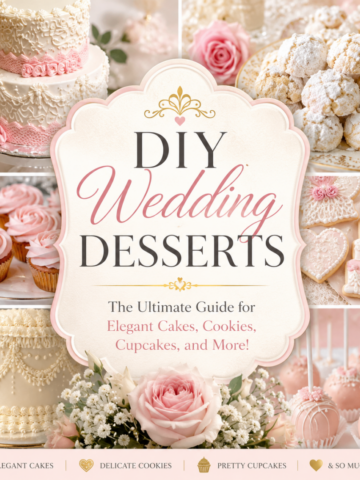
- DIY Wedding Cake
- How to Turn a Boxed Cake Mix into a Pound Cake
. . .and so much more.
Then, once you get solid recipes posted, you add strong keywords so Google begins directing traffic to the site. And if you notice you’re drawn to certain themes—say cookies, cakes, or pies—lean into that.
Work in Clusters (Hubs)

Here's another thing I learned pretty quickly. It's better to cluster "like" things together on your blog. On my site you’ll find a drop-down menu. If you look at it carefully, you’ll see everything divided by type.
You get the idea. Everything is divided by category, and the posts are hyperlinked together. One cake recipe points to another. One cookie recipe is linked to a hub of other cookie recipes.
This “webbing” is what Google needs to see authority. And those keywords—specific phrases people are typing into search engines—are critical to a blog’s survival.
So is marketing on social media. I have always been a Facebook user, so I started there. I’m also a huge fan of Pinterest, so I utilized that as well. (Hey, making pins is a fun venture for someone who thrives on creativity.)
Understanding My Real Audience

More than anything, I simply had to know my audience. And that, my friends, took time.
I was probably six months into blogging before I realized my target audience member was someone who wanted to better her baking skills. She looked at pretty cakes and cookies and thought: “Gosh, I wish I could do that.” I needed to convince her (or him!) it really was possible. She wanted beautiful results without spending a day in culinary school.
Basically, she was 2013 me.
I also knew most of my readers would be looking for shortcuts. Hey, if you’re not confident in your baking skills, you’re probably not baking from scratch. This is where my “out of the box” philosophy really took off.
Passion Matters More Than Trends

I felt completely liberated confessing to the masses that I had always used cake mixes—even for big projects like wedding cakes. In fact, doctoring a box of cake mix was kind of my thing.
And now, a few years into this blogging journey, Out of the Box Baking has become one of the internet’s go-to places for doctored cake mix recipes.
Don’t believe me? Check out my drop-down menu. I’ve got cake mix creations galore—everything from cakes to cupcakes to cookies to scones and more.
Now, what about you? What sort of food blog are you thinking of starting? What’s most intimidating to you? What are you concerned about?
I promise, you can do this. But let me encourage you to start with something you genuinely love. Passion matters more than trends. If you don’t start with something you’re passionate about, your readers will sense it.
What are you obsessed with?
- Grandma’s vintage recipes?
- Vegan recipes?
- Barbecuing?
- Cake decorating?
- Bread baking?
Your passion will lead to authentic blogging. And your authenticity will be obvious to readers.
Here’s the truth:
If you don’t care deeply about the topic, your audience probably won’t either.
How Blogging Changed My Relationship with Creativity

Here’s where the rubber meets the road for me. I’m a creative soul, and living a creative life is critical to my survival. And this is where I’ve found my biggest win with blogging. It affords me the opportunity to be creative in the kitchen without the burnout of client expectations.
Turns out, recipe development is a blast. And hey, if a recipe goes wrong, no one sees or cares except me. It also turns out, marketing is also a creative venture. Here are some of my favorite creative outlets that blogging affords:
- Building Pinterest pins in Canva with colorful fonts and images.
- Coming up with witty social media posts.
- Learning branding.
- Experimenting with AI tools.
- Planning seasonal campaigns.
It’s all a blast! And best of all, technology is almost my friend now. Over these past few years I’ve learned:
- How to write a post.
- How to incorporate keywords.
- How to write and schedule newsletters.
- How to use Canva.
- How to run Pinterest ads.
- How to use AI tools strategically.
- How to create and build a brand.
The reality? My creativity is actually expanding instead of disappearing.
The Freedom a Food Blog Can Create

Being self-employed is always risky. That hasn’t changed. Nothing is guaranteed. But I’m blessed in so many ways. As a blogger, I get to:
- Choose my own schedule.
- Batch my recipes.
- Work ahead.
- Schedule posts weeks or months in advance.
- Build an archive over time.
- Step away from the kitchen when I need to.
Sometimes I create two or three recipes in a single day and then take a week off from baking. (No, really!)
That flexibility is priceless. Best of all, I now bake because I want to, not because someone paid me to.
Oh, and to answer that lingering question—“Who eats all this stuff?”—the answer is usually “My grandkids and neighbors.” I also bake a lot for my Bible study group.
What Food Blogging Actually Involves

If you’ve made it this far, congratulations! Thank you for sticking with this post. Here are some basic components of a recipe blog:
- A Great Design: You'll want to design a blog that foodies will enjoy visiting. Make sure it's engaging but easy to view on both phone and iPad or laptop.
- Writing: You’ll need to learn how to write in a way that both helps and engages the reader.
- Photography: You’ll want ingredient shots, process shots, and beautiful final images.
- SEO: Don’t be intimidated. You can absolutely learn keywords and search optimization.
- Pinterest: About a third of my sessions come from Pinterest. It’s an incredible traffic driver.
- Newsletters: Email marketing has become a huge part of my business. If you haven't already subscribed, you'll want to do that so that you can see how my newsletters are laid out.
- Social Media: Facebook, Pinterest, Instagram, and even AI tools now play a role in modern blogging.
Frequently Asked Questions About Food Blogging

Do you need to be a professional baker to start a food blog?
Absolutely not. You simply need a willingness to learn, improve, and help your readers.
Do food bloggers really make money?
Many do. Income can come through ads, affiliate marketing, sponsored content, digital products, and more.
How long does it take to grow a food blog?
Longer than most people expect. Food blogging is definitely a long game, but consistency pays off.
Do I need fancy equipment?
No. You can start with a decent phone camera, a simple website, and a willingness to learn.
Encouragement for New Food Bloggers

Fun facts, if you’re just beginning:
- You don’t have to know everything. I’ve been at this for years and I’m still learning.
- You can learn gradually. Don’t pressure yourself to master everything overnight.
- Your first posts won’t be your best. Mine certainly weren’t.
- Consistency matters. Figure out what posting schedule is realistic for you.
- Passion matters. Pick a topic you can genuinely see yourself writing about for years.
And finally, I’ll leave you with this:
You don’t have to build a perfect blog. You just have to start sharing what you love.
So, what do you love, friends? Once you’ve established that, maybe it’s time to take a leap of faith.
Thanks for Stopping By
If you've enjoyed this post, please leave a comment or review. And if you have questions about blogging, feel free to reach out through the comments to learn more! I always love sharing what I've learned!
Before you go, why not pin some photos to your Pinterest boards?


About the Author/Baker
Janice Thompson is the baker, blogger, and author behind Out of the Box Baking, a popular baking website devoted to approachable recipes, creative dessert ideas, and practical baking tips for everyday home bakers. A former cottage baker and lifelong creative, Janice combines her love for baking with years of experience in writing, marketing, and storytelling to encourage readers in the kitchen and beyond.
Known for her “doctoring the cake mix” philosophy, Janice is passionate about helping bakers build confidence without intimidation. Through recipes, tutorials, seasonal inspiration, and behind-the-scenes blogging insights, she hopes to inspire others to embrace creativity, learn new skills, and discover joy in the process.
When she’s not baking, Janice enjoys writing books, creating Pinterest content, spending time with family and grandkids, and encouraging fellow creatives to pursue the things they love.