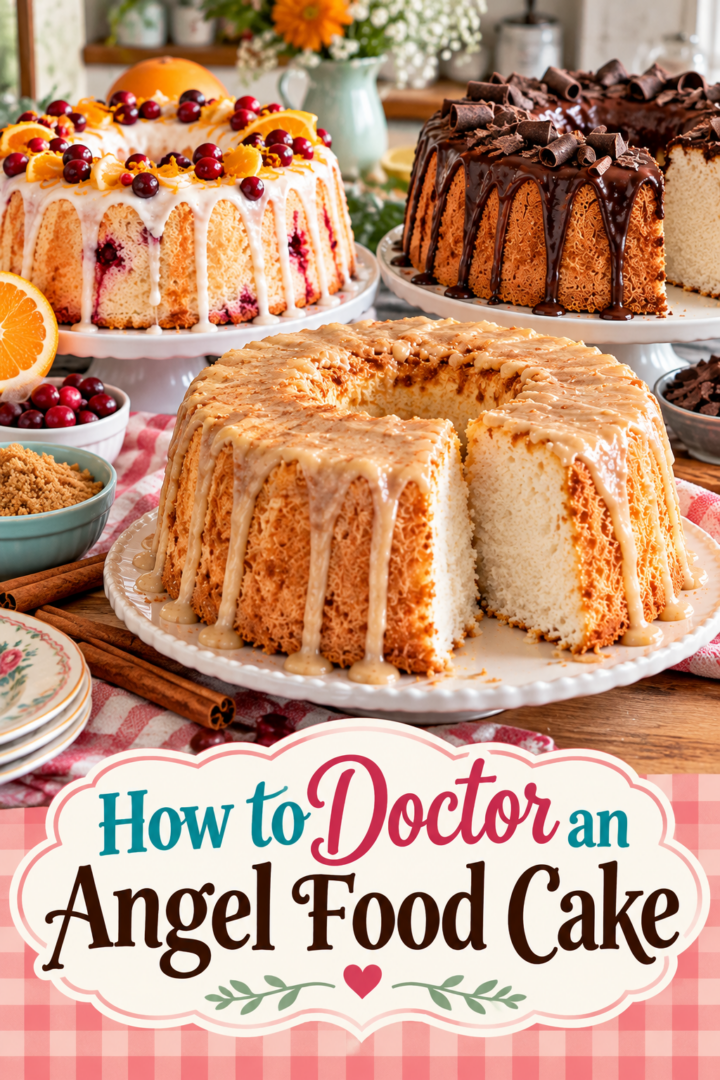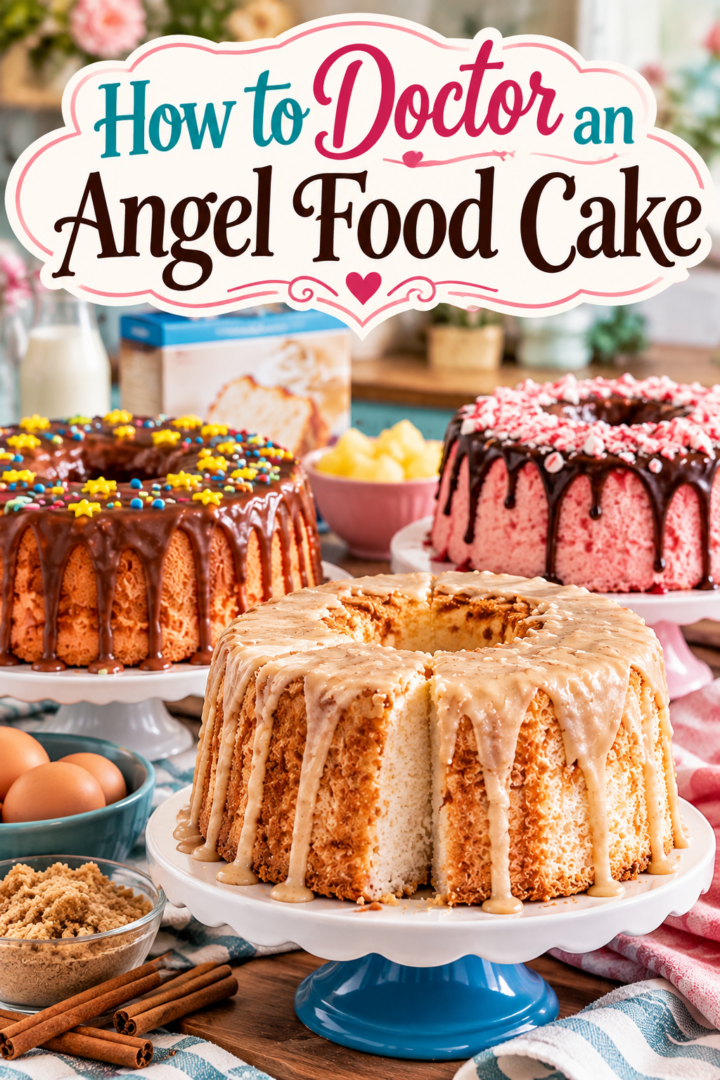
How to Doctor a Boxed Angel Food Cake Mix (Think Outside the Box!)
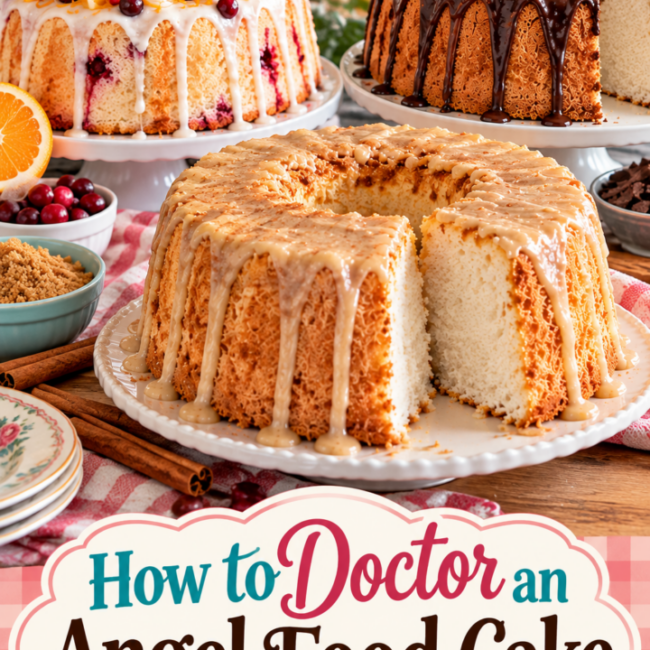
Learn how to doctor a boxed angel food cake mix with easy flavor additions, creative mix-ins, delicious glazes, and simple tricks for bakery-worthy results!
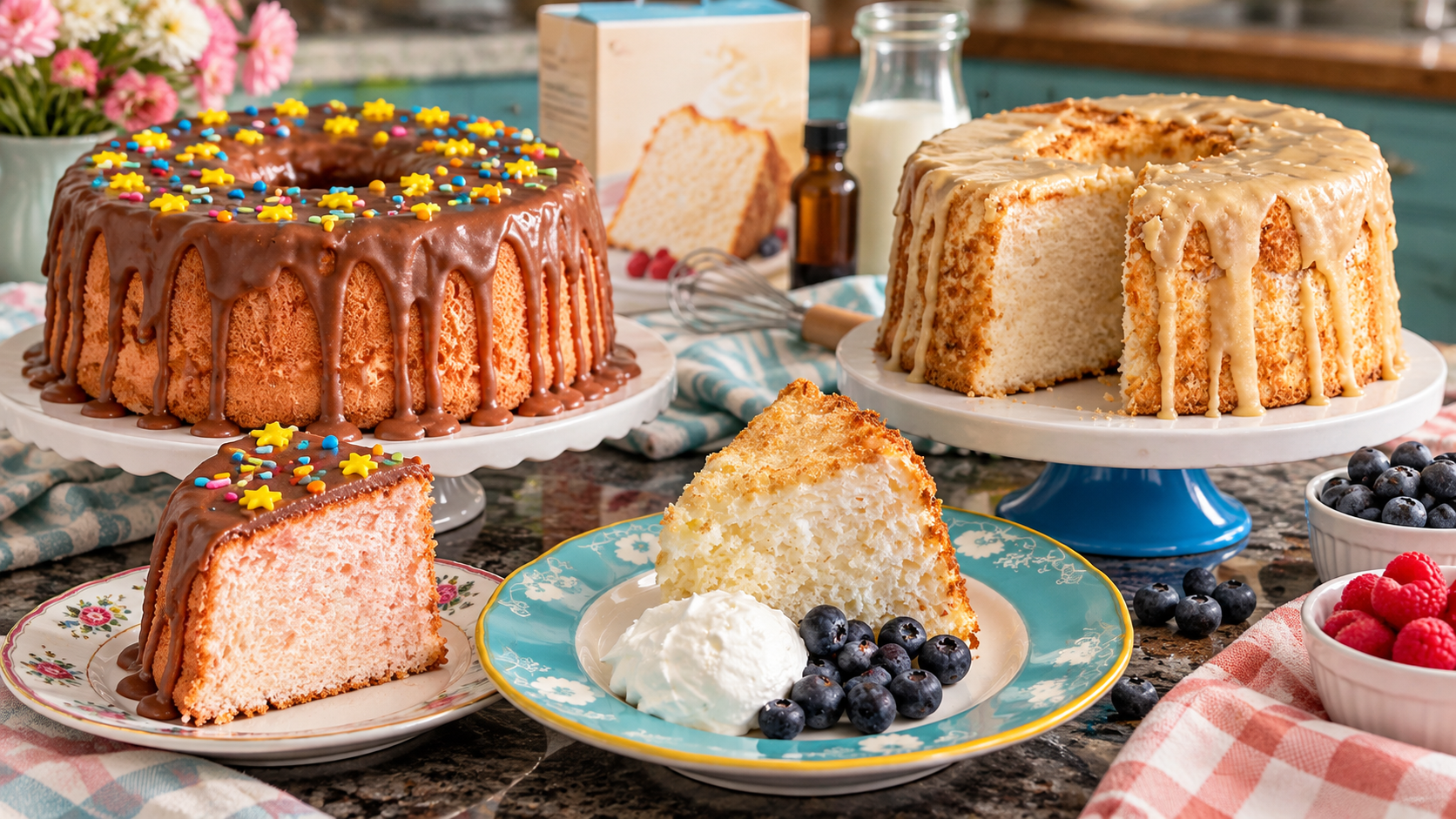
The box says, "Just Add Water." But what if I told you there's a whole world of possibilities hiding inside that ordinary box of angel food cake mix? From fruity variations to cinnamon-spiced cakes and delicious homemade glazes, there are plenty of ways to turn this simple pantry staple into something extraordinary!
If you've spent much time here at Out of the Box Baking, you already know I love doctoring boxed cake mixes. I've turned them into cookies, brownies, muffins, pound cakes, donuts, and just about everything in between. I've practically got the whole cake mix transformation thing down to a science. Literally!
But angel food cake? That one made me a little nervous.
You see, my homemade angel food cake is THE BOMB. I've been making it from scratch for years, and I know how delicate that lovely, airy structure can be. I wasn't convinced that a boxed version could measure up, and I certainly wasn't eager to start throwing extra ingredients into something that could collapse so easily.
Besides, I don't particularly like to fail. Hahaha!
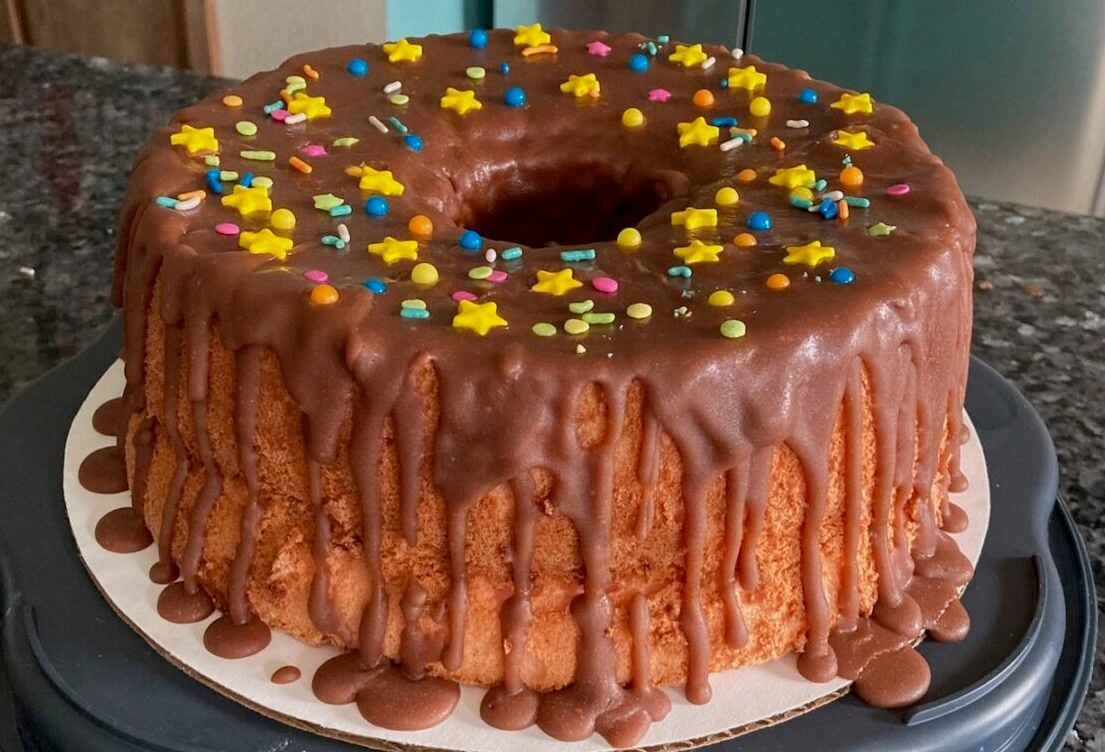
Then my stepmom started telling me about an amazing pink peppermint angel food cake she'd made. I imagined some elaborate recipe involving carefully whipped egg whites and all sorts of complicated steps. But when she sent me the recipe, I discovered that it was basically a boxed angel food cake mix with a little pink food coloring, peppermint extract, and a chocolate glaze.
Well, that got my attention!
It also taught me something important: Sometimes you don't have to reinvent the cake itself. A few thoughtful additions to the batter, followed by a delicious glaze or topping, can make all the difference.
And so began my adventures with boxed angel food cake mixes. The longer I bake, the more I realize there's always something new to discover!
Why Doctor a Boxed Angel Food Cake Mix?
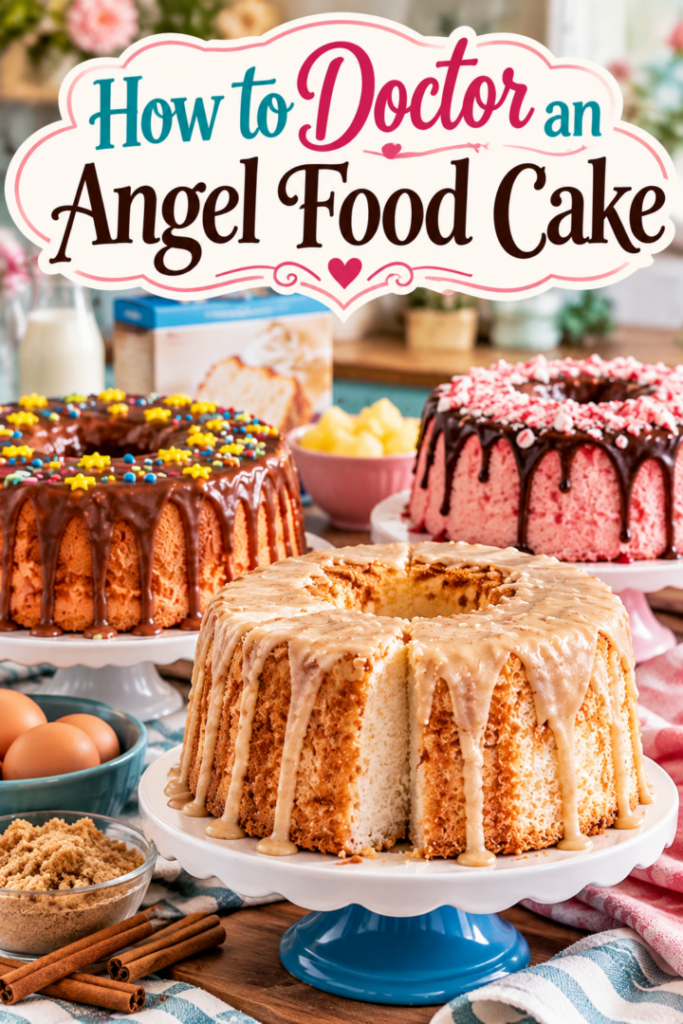
Angel food cake is already a wonderful dessert. It's light, springy, naturally low in fat, and delicious with fresh berries and whipped cream. My granddaughters and I have always loved these lighter cakes, which is one reason I've spent so much time experimenting with chiffon cakes, too.
Even when I was watching my calories, I knew I could enjoy a slice of angel food cake with fresh berries and a little sugar-free whipped cream. It was a satisfying treat without the richness of a traditional butter cake.
But sometimes you want something different. Maybe you're baking for Christmas and want peppermint and chocolate. Maybe you're planning a fall gathering and want cinnamon and brown sugar. Or perhaps you've got a can of crushed pineapple in the pantry and want to see what happens when you combine it with an angel food cake mix.
That's where doctoring comes in.
The goal isn't to make angel food cake complicated. Quite the opposite! We're looking for simple, creative ways to add flavor, color, texture, and personality while preserving as much of that beautiful airy structure as possible.
Before we start experimenting, though, it helps to understand what makes angel food cake so different from other cakes.
What Makes Angel Food Cake Different from Regular Cake?
Most traditional cakes get their tender texture from a combination of flour, eggs, sugar, fat, and chemical leavening. Butter and oil contribute richness and tenderness, while baking powder or baking soda helps the cake rise.
Angel food cake works differently.
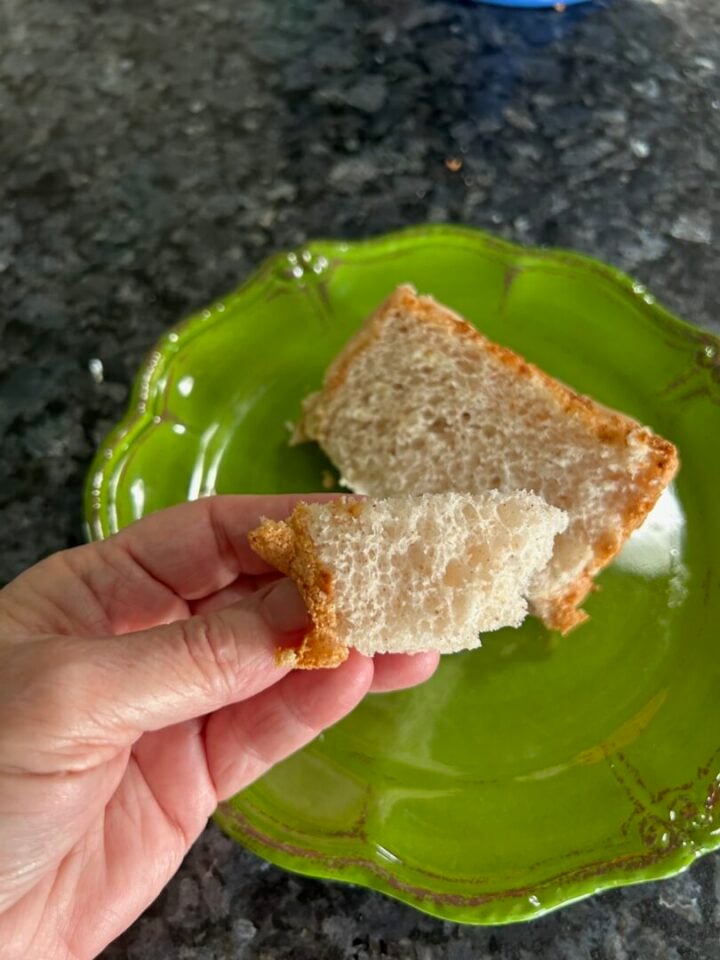
Traditional angel food cake is made with egg whites, sugar, flour, and a few supporting ingredients. It contains no egg yolks, butter, or oil. Its remarkable height comes primarily from air beaten into the egg whites, which creates a foam filled with thousands of tiny bubbles.
As the cake bakes, those bubbles expand. Meanwhile, the egg proteins coagulate and the starches set, creating a delicate structure that holds the cake's height.
This is why angel food cake feels so light and springy when you press it gently with your fingers. You're eating a cake built around air!
And it's also why we have to be careful when adding ingredients.
Heavy additions can weigh down the batter, while excess fat can interfere with the foam. Too much liquid can upset the balance of the recipe, and aggressive mixing can knock out some of the air we've worked so hard to create.
Does that mean we can't experiment?
Of course not! It just means we need to be a little smarter about how we do it.
What's Actually in a Boxed Angel Food Cake Mix?
When you make angel food cake from scratch, you have to separate eggs, whip the whites, gradually add sugar, and carefully fold in the flour mixture. It's a lovely process, but it requires some patience and attention.
Boxed angel food cake mixes simplify much of that work.
Most just-add-water mixes contain sugar, flour, dried egg whites, and ingredients that help the batter whip properly and maintain its structure. The exact formulation varies by brand, but the goal is the same: Add the required water, beat the mixture according to the directions, and create a light, airy batter without separating a single egg.
That's pretty remarkable when you think about it!
The important thing to understand is that these mixes are carefully balanced. They already contain the ingredients needed to produce the cake's structure, so adding extra eggs, butter, or oil isn't necessary and may actually cause problems.
And here's another important point: Not every angel food cake mix requires the same amount of water. Always read the directions on your particular box before beginning.
I often use Betty Crocker Angel Food Cake Mix, but other brands can work beautifully, too.
The Golden Rule: Start Small and Think Light
When doctoring an ordinary yellow or chocolate cake mix, I sometimes make fairly dramatic changes. I might add pudding mix, replace oil with butter, or swap water for milk.
Angel food cake requires a gentler approach.
Because its structure depends so heavily on air, I like to begin with ingredients that add plenty of flavor without much weight. Extracts, spices, citrus zest, and small amounts of food coloring are good starting points.
Heavier additions, including fruit purees, chocolate chips, nuts, and thick fillings, require more caution. They may still be possible in specially developed recipes, but they aren't necessarily good candidates for casually tossing into a boxed mix.
The easiest way to think about it is this: The more an ingredient changes the weight, moisture, or fat content of the batter, the more likely it is to affect the finished cake.
Let's explore the possibilities!
1. Add Flavor with Extracts
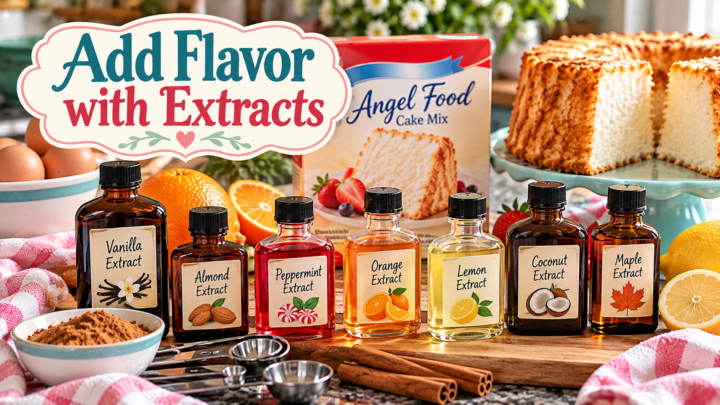
One of the simplest ways to doctor an angel food cake mix is to add a little flavoring extract. Because extracts are concentrated, they can introduce a surprising amount of flavor without significantly changing the batter's volume.
Vanilla is an obvious choice, but almond, peppermint, orange, lemon, coconut, and maple extracts can all give angel food cake a different personality.
For most standard baking extracts, I recommend starting with about ¼ to ½ teaspoon per box, then adjusting according to the strength of the flavoring. Vanilla is usually milder, so 1 teaspoon is a reasonable starting point.
Peppermint and almond extracts can be especially strong, so start conservatively. You want a pleasantly flavored cake, not one that tastes like a bottle of extract!
Add the extract with the water before beating the batter according to the package directions. That way, the flavoring distributes evenly without requiring extra mixing afterward.
And remember, extracts vary in strength. Concentrated flavoring oils aren't interchangeable teaspoon-for-teaspoon with ordinary baking extracts.
2. Add Warmth with Cinnamon and Other Spices
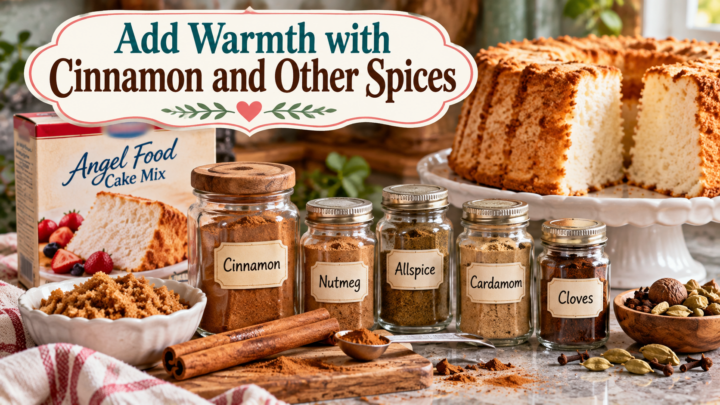
Dry spices are another wonderful way to change the personality of a boxed angel food cake.
Cinnamon is one of my favorites because it brings warmth and familiarity without requiring complicated ingredients. It also pairs beautifully with brown sugar, apples, caramel, and vanilla.
For my Snickerdoodle Angel Food Cake, I used 1 teaspoon ground cinnamon and 1 teaspoon vanilla extract with a box of Betty Crocker Angel Food Cake Mix and the required 1 ⅓ cups water.
I whisked the cinnamon into the dry mix before adding the liquids, which helped distribute the spice throughout the batter.
Other possibilities include nutmeg, cardamom, allspice, cloves, and carefully measured spice blends. Because some of these flavors are quite strong, I recommend beginning with just ⅛ to ¼ teaspoon, depending on the spice.
You can also experiment with a small amount of pumpkin pie spice for a fall-inspired cake. Just remember that commercial blends vary, so check the ingredients if you have any food allergies or sensitivities.
The important thing is not to overwhelm the delicate cake with too much dry material. A little spice goes a long way.
3. Add Color for Special Occasions
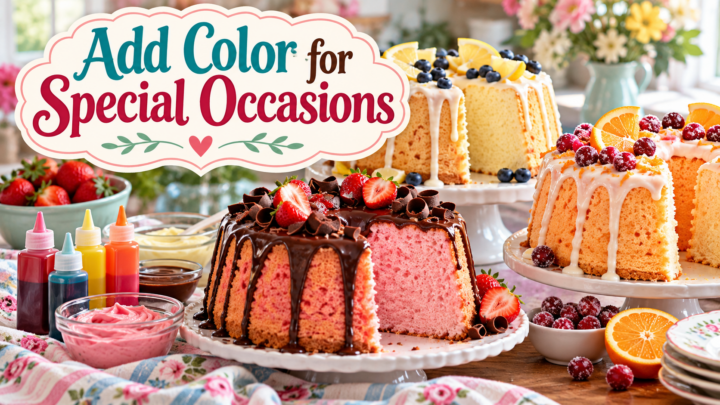
Sometimes the transformation is as much about appearance as flavor.
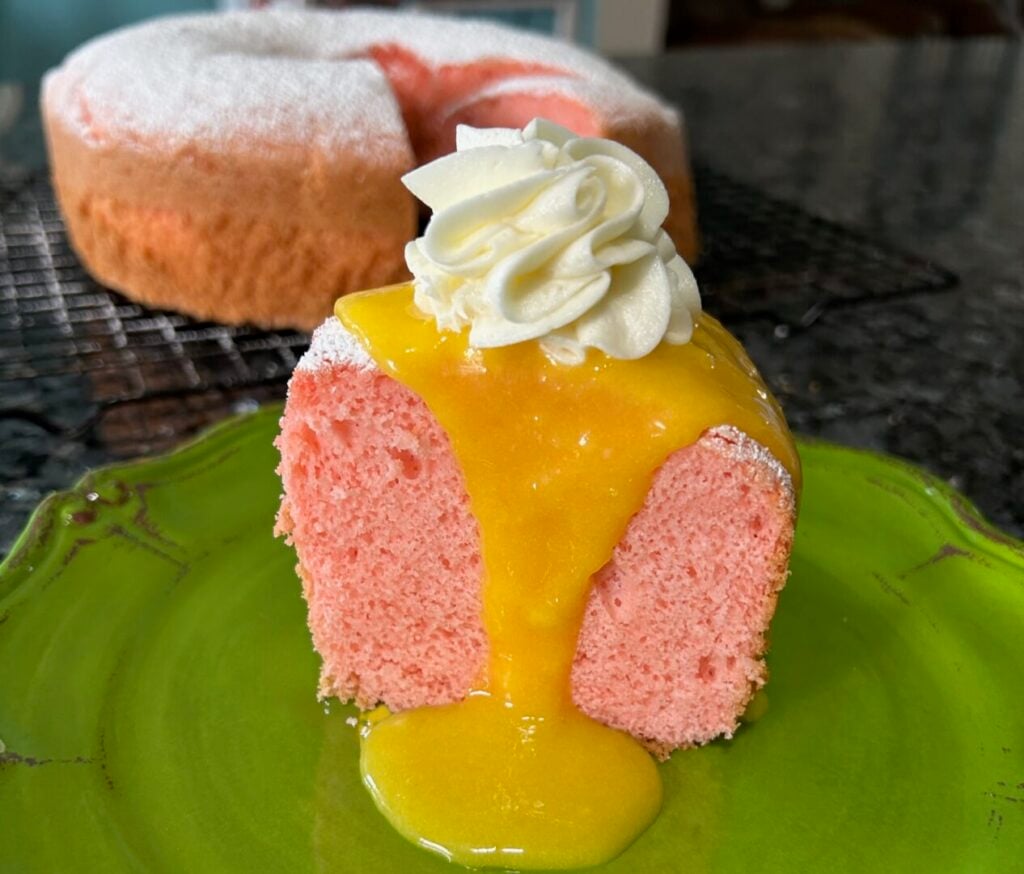
My stepmom's pink peppermint angel food cake is a perfect example. A little pink coloring turned an ordinary cake into something festive and memorable, especially when she finished it with chocolate glaze.
You can use small amounts of food coloring to create a pastel cake for holidays, baby showers, birthdays, or other special occasions.
Pink works beautifully with peppermint or strawberry flavoring. Pale yellow complements lemon, while a soft orange shade could be lovely for an orange-flavored cake.
I recommend starting with a very small amount of coloring and adding more only if needed. Gel coloring is concentrated, so a tiny amount may be sufficient. Liquid coloring can also work in small quantities.
Remember that angel food cake batter is naturally pale, and the finished cake will develop a golden exterior as it bakes. The color inside may be softer than the color of the raw batter.
And don't overmix the batter trying to achieve a perfectly uniform shade. Maintaining the cake's volume is more important than getting every last streak of color blended.
4. Add Citrus Flavor with Zest and Juice
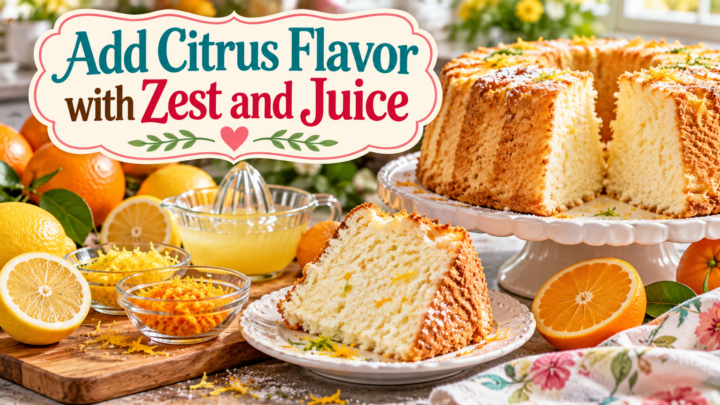
Citrus is a natural partner for angel food cake because its bright, refreshing flavor complements the cake's light texture.
Lemon, orange, and lime are all worth exploring, but there are two different ways to introduce citrus flavor: zest and juice.
Citrus zest is often the easier choice because it contains aromatic oils that provide strong flavor without adding much moisture. Start with 1–2 teaspoons of finely grated zest, avoiding the bitter white pith underneath.
Citrus juice requires a little more caution. Replacing water with juice changes the acidity and sugar content of the batter, which can affect the way the foam forms and sets during baking.
For an experimental citrus version, I'd begin by replacing no more than one-quarter of the required water with juice, then evaluating the results before making larger substitutions. This is a testing suggestion, not a guaranteed substitution for every brand.
You can also keep the batter simple and add most of the citrus flavor through a glaze made with powdered sugar and fresh lemon or orange juice.
In fact, that's one of my favorite ways to dress up angel food cake!
5. Can You Replace the Water with Something Else?
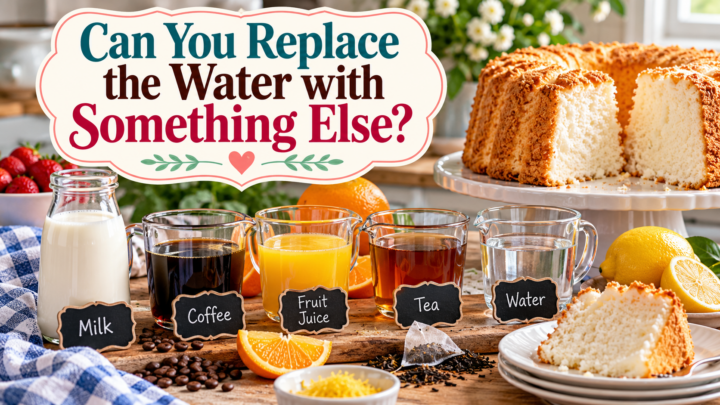
Now we're getting into some interesting territory!
When doctoring regular cake mixes, bakers often replace water with milk, coffee, fruit juice, or other liquids. But angel food cake is a different kind of recipe, and those substitutions aren't always interchangeable.
Water is important because it hydrates the dry ingredients and helps the egg-white proteins form their airy structure.
Replacing it with another liquid may change the batter's acidity, sugar content, fat content, or viscosity. Each of those factors can affect how well the cake rises.
Fruit juice is one possibility, especially when used in a limited amount. Coffee or tea might also contribute flavor, but I'd approach those as experiments rather than guaranteed substitutions.
Milk and cream are less appealing choices for a traditional angel food cake because they introduce fat and other solids that can change the foam's behavior.
My recommendation is to begin with the amount of water specified on the box, use extracts or zest for additional flavor, and experiment with liquid substitutions only when you're willing to test the results.
And don't forget: A glaze made with fruit juice, coffee, or another flavorful liquid can give you much of the same flavor without changing the cake batter at all.
6. Can You Add Fruit to Angel Food Cake Mix?
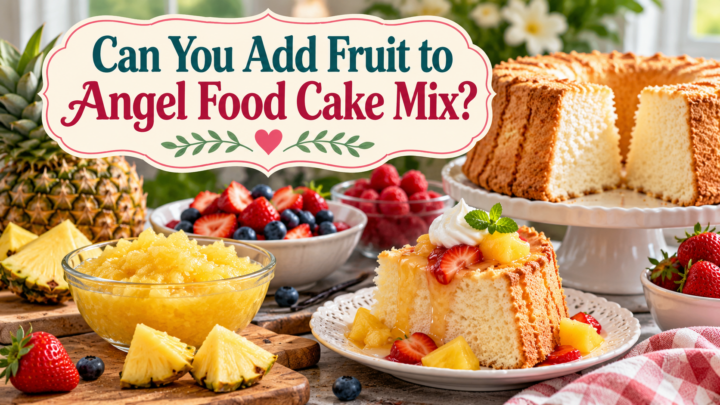
Yes! But this is where things become especially interesting.
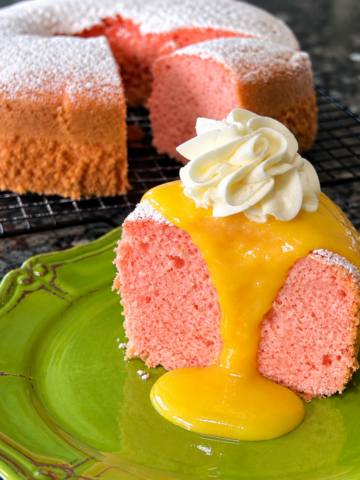
One of my favorite boxed angel food cake experiments is a two-ingredient pineapple version made with angel food cake mix and crushed pineapple.
The pineapple contributes flavor, sweetness, and moisture, creating a cake that's quite different from a traditional angel food cake.
But not every fruit behaves the same way.
Crushed pineapple contains a significant amount of liquid, while thick fruit purees contain more concentrated solids and fiber. Dried fruit adds weight and concentrated sweetness, and fresh berries release moisture as they bake.
All of those differences matter when we're working with a delicate foam-based batter.
Crushed Pineapple
Crushed pineapple is a popular addition to boxed angel food cake because its liquid can help hydrate the mix while adding tropical flavor. The familiar two-ingredient method uses the pineapple and its juice rather than preparing the mix with the usual water.
This is a specific recipe method, however, not a general rule that any can of fruit can replace water.
Fresh Berries
Strawberries, blueberries, and raspberries are delicious with angel food cake, but adding them directly to the batter can be tricky. Their moisture and weight may cause them to sink or create wet spots.
For the most reliable result, I recommend serving fresh berries alongside the finished cake or spooning them over individual slices.
Dried Cranberries and Other Dried Fruit
Finely chopped dried cranberries could be a lovely addition to an orange-flavored angel food cake, especially during the holidays.
I'd begin with a small amount, perhaps ¼ cup per box, and fold them in gently after preparing the batter. Even then, some pieces may sink, and the added weight could affect the rise.
This is an experiment I plan to try, rather than a tested technique I'm ready to guarantee.
Applesauce and Fruit Purees
Applesauce, mashed bananas, pumpkin puree, sweet potato puree, and other thick fruit or vegetable mixtures introduce moisture along with fiber and solids.
These ingredients can make angel food cake denser or even gummy if the proportions aren't carefully adjusted.
I wouldn't recommend replacing all the water with a thick puree without developing and testing a specific recipe.
That doesn't mean these flavors are off-limits. Sometimes the best approach is to keep the angel food cake light and add the fruit as a topping after baking.
7. The Secret Weapon: Glazes!

Here's something I've learned during my adventures with boxed angel food cake: You don't always have to change the batter to create a completely different dessert.
Sometimes the real magic happens after the cake comes out of the oven.
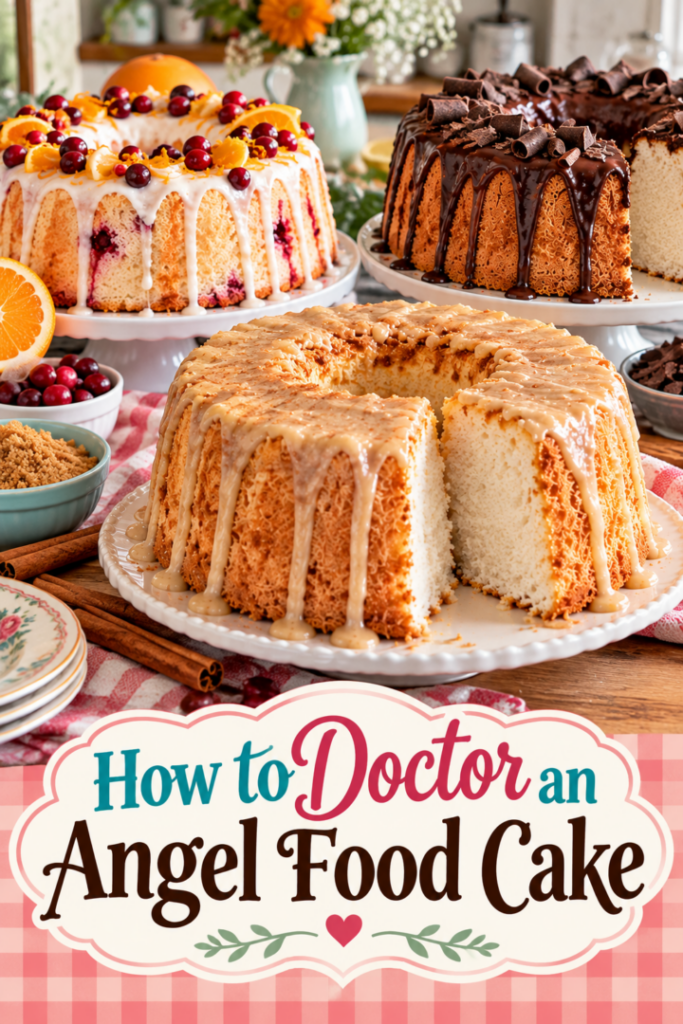
A plain angel food cake can become a chocolate dessert, a citrus cake, a caramel-drizzled treat, or a holiday showstopper simply by changing the glaze.
And the best part? You don't have to worry about the glaze interfering with the cake's rise because you're adding it after the cake has baked and cooled.
Simple Powdered Sugar Glaze
For a basic glaze, whisk together 1 cup powdered sugar with approximately 1–2 tablespoons milk or water, adding the liquid gradually until the mixture reaches a pourable consistency.
A little vanilla extract adds flavor, and you can adjust the thickness depending on whether you want a light drizzle or a more noticeable coating.
Lemon or Orange Glaze
Replace the milk or water with fresh lemon or orange juice. Add a little finely grated zest for extra citrus flavor.
This is an easy way to give angel food cake a bright, refreshing finish without altering the batter.
Chocolate Glaze
Chocolate and angel food cake make a wonderful combination. A simple chocolate glaze can be made with powdered sugar, cocoa powder, vanilla, and enough milk to create a smooth consistency.
You can also use a thin chocolate ganache, although that will create a richer dessert.
My pink peppermint angel food cake is a perfect example of how beautifully chocolate complements a flavored angel food cake.
Brown Sugar Vanilla Glaze
For a cozy fall dessert, I love the idea of a brown sugar glaze. My snickerdoodle version uses butter, brown sugar, milk, vanilla, and powdered sugar to create a sweet, caramel-like topping.
A little cinnamon sugar sprinkled over the wet glaze finishes the cake beautifully.
Caramel Drizzle
Caramel sauce is another delicious option, particularly when paired with cinnamon, apples, or toasted nuts.
Because caramel can be thick and heavy, I recommend using a light drizzle rather than covering the entire cake with a dense layer.
Fruit Glazes
Strawberry, raspberry, blueberry, and other fruit flavors can be incorporated into glazes, provided the liquid is smooth enough to drizzle.
Fruit juices or strained fruit sauces are often easier to work with than thick purees containing seeds or large pieces.
The possibilities really do begin to multiply once you realize that the topping can provide much of the cake's personality.
8. Don't Forget the Toppings!
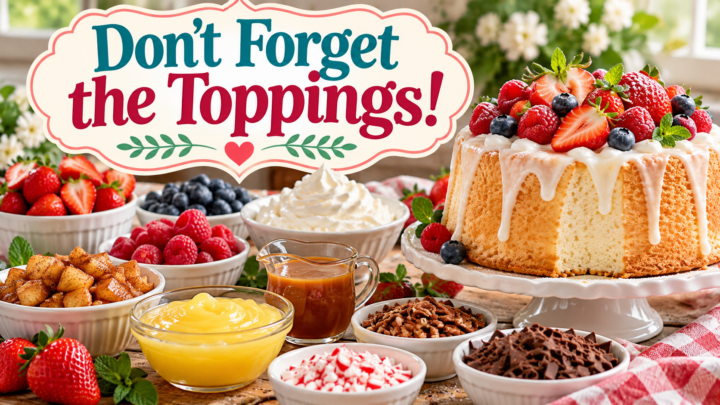
Glazes are wonderful, but they're only the beginning.
Angel food cake is a beautiful canvas for all sorts of toppings, especially because its light texture contrasts so nicely with fruit, cream, and richer sauces.
Fresh strawberries and whipped cream are classics for good reason. The berries add brightness, while the cream brings just enough richness to make the cake feel special.
For fall, try warm cinnamon apples, a spoonful of caramel, or a little toasted pecan topping. During the holidays, chocolate drizzle, crushed peppermint candy, or a dusting of cinnamon sugar can give the cake a festive finish.
You can also serve angel food cake with fruit compotes, lemon curd, pudding, or lightly sweetened whipped cream.
One of my favorite simple desserts has always been angel food cake with fresh berries and sugar-free whipped cream. It's proof that you don't need a complicated topping to create something delicious.
When using heavy or moist toppings, I prefer adding them shortly before serving or offering them alongside individual slices. This helps keep the cake from becoming soggy or compressed.
9. What Should You Avoid Adding to Angel Food Cake Batter?
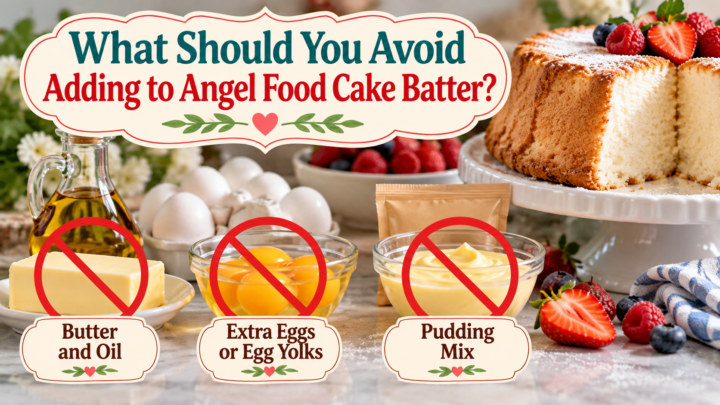
Now that we've explored the possibilities, let's talk about a few things that deserve caution.
Angel food cake isn't as forgiving as a traditional butter cake, and some additions can interfere with the structure that makes it so special.
Butter and Oil: Traditional angel food cake contains no added fat. Adding butter or oil to a standard boxed angel food cake mix can interfere with the egg-white foam and produce a shorter, denser cake. Save those ingredients for toppings and glazes unless you're following a specially developed recipe.
Extra Eggs or Egg Yolks: Boxed angel food cake mixes already contain the egg-white ingredients needed for the recipe. Adding extra eggs can change the balance, and egg yolks introduce fat. Follow the package directions rather than treating the mix like a traditional yellow cake mix.
Pudding Mix: Instant pudding is a popular addition to ordinary cake mixes, but it can add too much weight and change the moisture balance in angel food cake. I wouldn't recommend it as a casual substitution.
Large Chocolate Chips: Chocolate chips are heavy compared with the airy batter, and their fat content adds another complication. They may sink or create uneven pockets. Chocolate glaze is a more reliable option.
Nuts and Heavy Candy Pieces: Chopped nuts, candy bars, and similar additions can weigh down the batter. They're generally better used as toppings after baking.
Thick Fruit Purees: Purees can work in carefully developed recipes, but adding large amounts to a standard mix may create a dense or gummy result.
Too Much Extra Liquid: Angel food cake mixes are formulated for a particular amount of moisture. Adding extra liquid without adjusting the recipe can change the batter's structure and baking behavior.
The takeaway isn't that these ingredients can never appear in an angel food cake recipe. It's that they shouldn't be added casually to a boxed mix without understanding how they affect the batter.
10. Four Ways to Transform a Boxed Angel Food Cake Mix
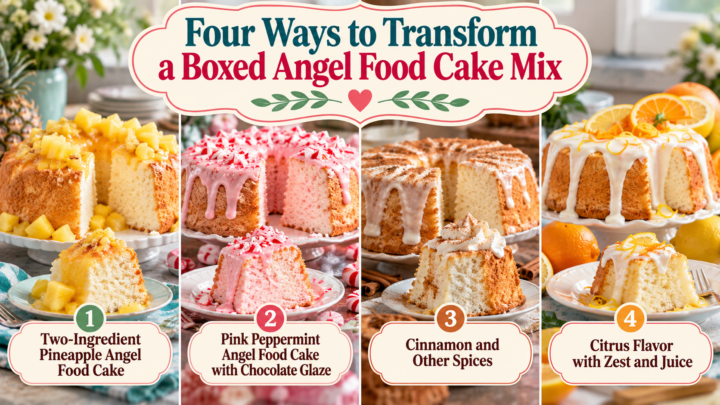
Now that we've covered the science and the possibilities, let me show you how I've been putting these ideas into practice in my own kitchen.
These examples illustrate different ways to doctor a boxed angel food cake mix. Each has its own recipe post with complete measurements, baking instructions, and photographs.
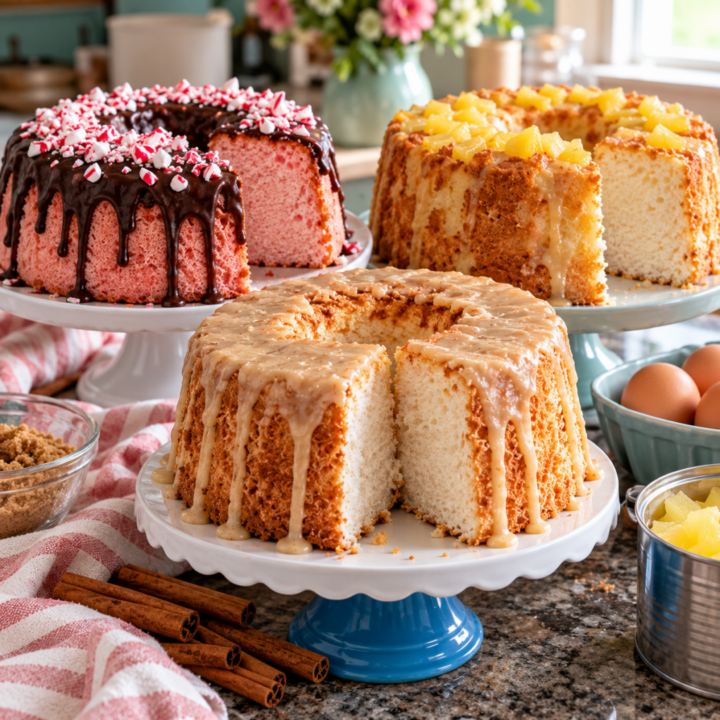
Two-Ingredient Pineapple Angel Food Cake
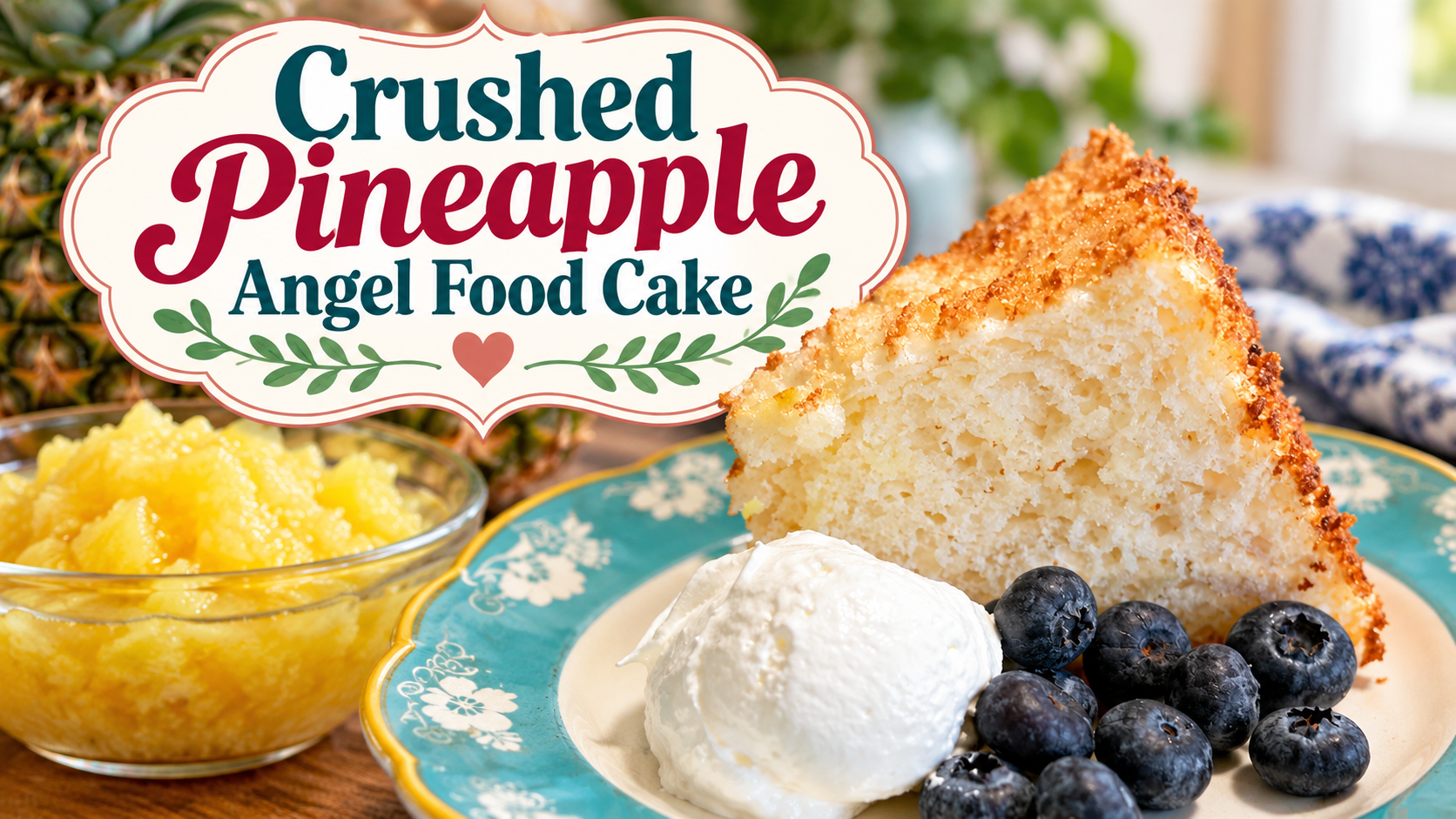
This easy cake combines a boxed angel food cake mix with crushed pineapple and its juice. The pineapple provides sweetness, moisture, and fruity flavor without requiring a long list of ingredients.
It's a great example of how one carefully chosen ingredient can transform an ordinary mix into something completely different.
Find the complete recipe: Two-Ingredient Pineapple Angel Food Cake.
Pink Peppermint Angel Food Cake with Chocolate Glaze
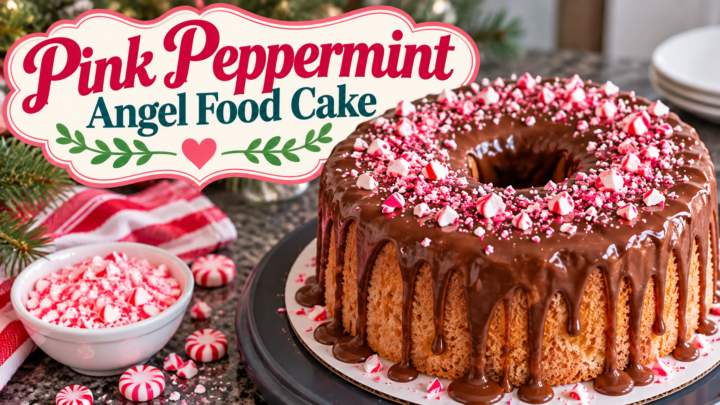
This is the cake that started my boxed angel food cake adventures! A little peppermint extract and pink food coloring give the cake its festive personality, while a chocolate glaze makes it feel extra special.
It's a wonderful example of how extracts, color, and a delicious finishing touch can work together without requiring a complicated recipe.
Find the complete recipe: Pink Peppermint Angel Food Cake.
Snickerdoodle Angel Food Cake with Brown Sugar Glaze
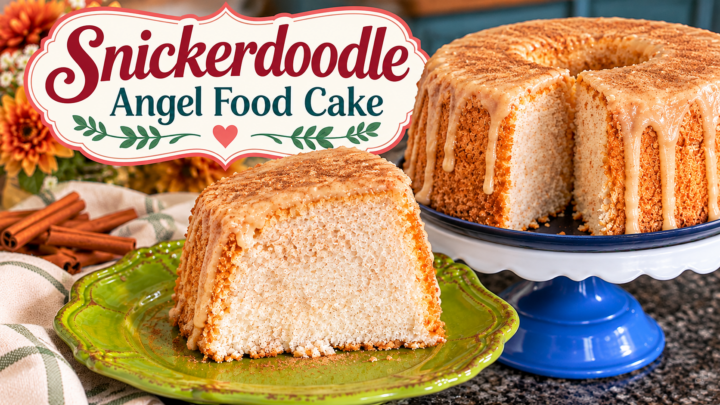
This cozy version begins with a boxed angel food cake mix, 1 teaspoon cinnamon, 1 teaspoon vanilla, and the water called for on the package.
After baking and cooling, the cake gets a homemade brown sugar vanilla glaze and a light sprinkling of cinnamon sugar.
It's a lovely option for fall gatherings, Thanksgiving, or Christmas, and a great example of how spices and glazes can work together to create a familiar flavor combination.
Find the complete recipe: Snickerdoodle Angel Food Cake with Brown Sugar Glaze.
Orange Cranberry Angel Food Cake — An Upcoming Experiment
I'm also planning to experiment with orange flavoring and finely chopped dried cranberries. I love the idea of a light citrus cake with little ruby-red flecks of cranberry throughout.
Because dried fruit adds weight to the batter, I'll be testing the proportions carefully before sharing a finished recipe.
That's part of the fun of baking, isn't it? There's always another idea waiting to be explored!
11. Choosing the Right Pan for Angel Food Cake
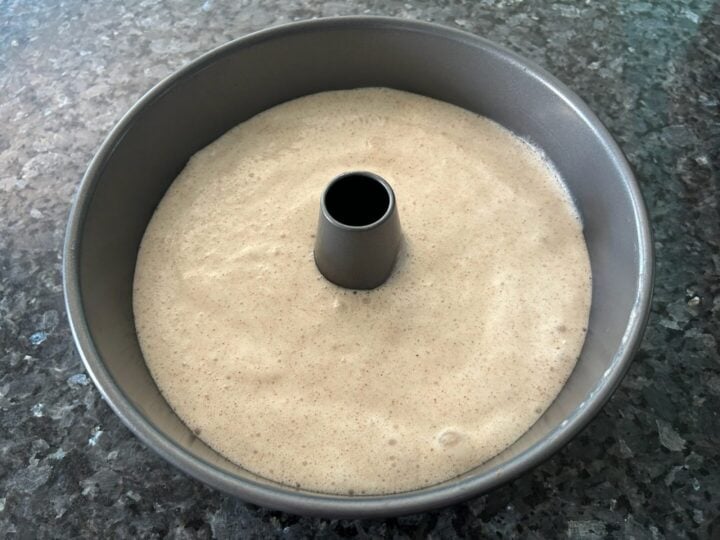
One of the most important things you can do when baking angel food cake is to use the proper pan.
A traditional angel food cake tube pan has a tall center tube and straight sides. The center tube helps heat reach the middle of the cake, while the sides provide a surface for the batter to cling to as it rises.
Unlike most cake pans, a traditional angel food cake pan should not be greased.
The batter needs to grip the sides of the pan, and a slippery surface can interfere with that process.
A traditional uncoated aluminum tube pan is an excellent choice. Dark or nonstick pans may require different baking temperatures and times, so always follow the instructions on your particular cake mix package.
Some boxed mixes provide instructions for alternate pans, but don't assume that an ordinary bundt pan or loaf pan will work the same way.
Angel food cake has special structural needs, and the pan plays an important role in its success.
12. Why You Must Cool Angel Food Cake Upside Down
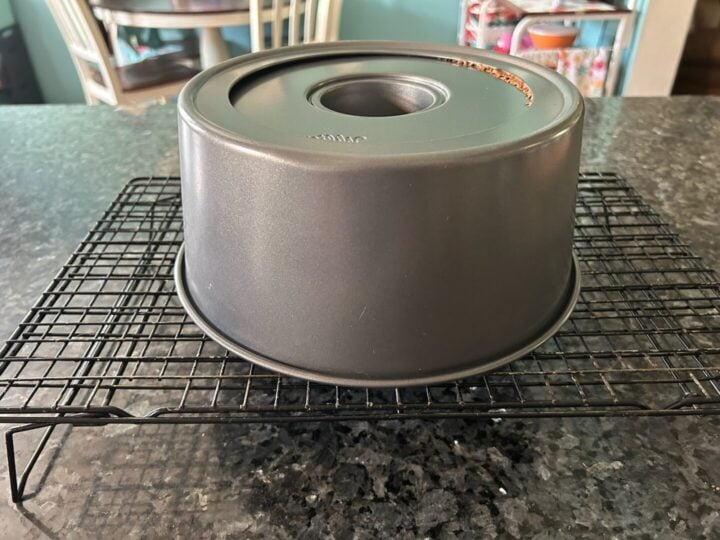
If you've never made angel food cake before, this step might seem a little strange.
After all, most cakes cool right-side up on a wire rack. Why should angel food cake be any different?
The answer goes back to its delicate structure.
When angel food cake first comes out of the oven, it's still quite soft. If you leave it sitting upright while it cools, the weight of the cake can compress the airy crumb and cause it to shrink.
Turning the pan upside down allows the cake to hang from the sides of the pan while its structure finishes setting.
Many traditional tube pans have little feet that hold the inverted pan above the countertop. Others may need to be supported according to the pan manufacturer's instructions.
Allow the cake to cool completely before attempting to remove it. This often takes 1–2 hours, depending on the size of the cake and the pan.
Once cooled, carefully run a thin knife or offset spatula around the sides and center tube to release the cake.
It may seem like an extra step, but it makes a tremendous difference in the finished texture.
13. Troubleshooting Boxed Angel Food Cake
Even with a boxed mix, angel food cake can occasionally be temperamental. Here are some common problems and what might cause them.
Why Didn't My Angel Food Cake Rise?
A poor rise can happen when the batter isn't whipped sufficiently, the mix is old, the pan isn't appropriate, or heavy ingredients interfere with the foam.
Make sure you're following the mixing directions on the package and using the recommended pan. If you've added extra ingredients, consider whether they might be too heavy for the delicate batter.
Why Did My Angel Food Cake Collapse?
Angel food cake can collapse if it's underbaked, cooled upright, or unable to cling properly to the sides of the pan.
Excess moisture or heavy additions can also contribute to structural problems.
Bake until the top is golden and springs back when gently touched, then invert the pan immediately.
Why Is My Angel Food Cake Gummy?
A gummy texture may indicate underbaking, excess moisture, or an ingredient that changed the balance of the batter.
Fruit purees and liquid substitutions deserve particular attention because they can introduce additional moisture and solids.
Why Is My Angel Food Cake Rubbery?
Angel food cake naturally has a springy texture, but excessive toughness or rubberiness may result from overmixing beyond the package instructions, overbaking, or an imbalance in the batter.
Follow the mixing and baking directions carefully, and avoid adding unnecessary ingredients.
Why Did My Cake Stick to the Pan?
Some sticking is normal and even desirable! Angel food cake needs to cling to the pan while rising and cooling.
Allow the cake to cool completely before loosening it with a thin knife or spatula. Don't grease the pan simply to make removal easier.
Why Did My Fruit Sink to the Bottom?
Fruit pieces are heavier than the surrounding foam, and angel food batter doesn't always have enough strength to suspend them evenly.
Use small amounts of finely chopped fruit when experimenting, and remember that some sinking may still occur. For a more reliable result, add the fruit after baking.
14. Frequently Asked Questions
Can you really doctor a boxed angel food cake mix?
Absolutely! Extracts, spices, food coloring, and carefully chosen additions can change the flavor and appearance of the cake. Glazes and toppings offer even more possibilities without interfering with the batter's structure.
Can I use a different brand of angel food cake mix?
Yes. Betty Crocker is one brand I use, but other just-add-water mixes can work as well. Always follow the package directions for the required water amount, mixing method, oven temperature, and baking time.
Can I add vanilla extract to angel food cake mix?
Yes! Vanilla is one of the easiest additions. Start with about 1 teaspoon per standard box, adding it with the water before mixing.
Can I add cinnamon to angel food cake mix?
Yes. I used 1 teaspoon cinnamon in my snickerdoodle version. Whisking it into the dry mix before adding water helps distribute it evenly.
Can I add food coloring to boxed angel food cake?
Yes. Small amounts of food coloring can create beautiful pastel cakes. Use a light hand, especially with concentrated gel coloring.
Can I replace the water with milk?
I don't recommend casually replacing all the water with milk in a standard angel food cake mix. Milk introduces fat and additional solids that may affect the foam. Use the water called for on the package unless you're following a tested variation.
Can I replace the water with fruit juice?
You can experiment with partial juice substitutions, but the added acidity and sugar may affect the cake's rise and texture. Start conservatively and test the results.
Can I add chocolate chips to angel food cake mix?
Chocolate chips are heavy and may sink or interfere with the cake's structure. For a more reliable chocolate variation, try adding chocolate glaze after baking.
Can I add pudding mix to angel food cake?
I wouldn't recommend adding instant pudding mix to a standard angel food cake batter without a tested recipe. It changes the balance of dry ingredients and may produce a dense cake.
Can I add fresh fruit to the batter?
Small amounts may work in specially developed recipes, but fresh fruit introduces moisture and weight. Serving fruit on top of the finished cake is often the safer approach.
Can I make boxed angel food cake ahead of time?
Yes. Bake and cool the cake completely, then store it in an airtight container. For the prettiest results, add glazes and moist toppings closer to serving time.
How do I store leftover angel food cake?
Plain angel food cake can generally be stored covered at room temperature for about 1–2 days or frozen for longer storage. Cakes topped with dairy-based glazes, whipped cream, or other perishable ingredients should be refrigerated.
Can angel food cake be frozen?
Yes! Wrap the completely cooled cake or individual slices tightly and freeze for up to 2–3 months for best quality. Thaw before serving, and add fresh toppings afterward.
15. More Cake Mix Transformations to Explore
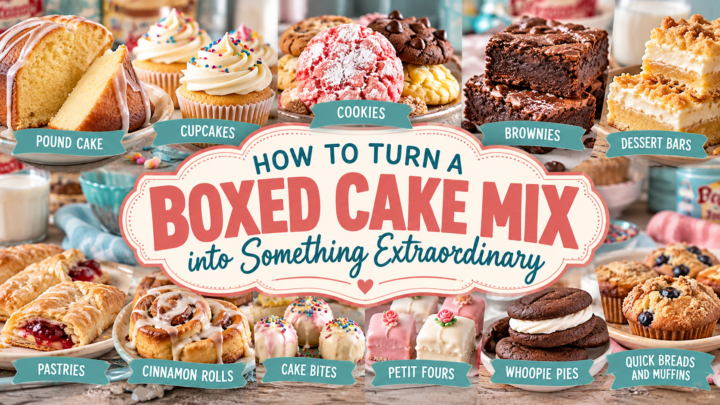
If you've enjoyed learning how to doctor a boxed angel food cake mix, there's plenty more cake mix magic waiting for you here at Out of the Box Baking!
One of my favorite things about baking is discovering how a single box of cake mix can become so many different desserts. And the more I experiment, the more possibilities I discover.
Be sure to check out my How to Turn a Boxed Cake Mix into a Chiffon Cake tutorial, where I explain how to transform an ordinary cake mix into something light, airy, and springy.
You might also enjoy my tutorial on turning a boxed white cake mix into an angel food-style cake. It's another fun example of how a little baking science can open up new possibilities.
And don't forget to explore the rest of my "How to Turn a Boxed Cake Mix Into..." series, where you'll find tutorials for pound cakes, cookies, brownies, muffins, cupcakes, donuts, and other creative treats.
About the Baker
I'm a lifelong baker, cookbook author, and lover of all things sweet. Here at Out of the Box Baking, I enjoy taking ordinary ingredients and finding extraordinary ways to use them.
I've spent years experimenting with boxed cake mixes, but one of the things I love most about baking is that there's always something new to learn. Just when I think I've figured out every possible transformation, another idea comes along and sends me right back to the kitchen.
That's part of the joy of baking, and I'm so glad you're here to share it with me!
Thanks for Stopping By!
I hope this tutorial has given you a whole new way to think about boxed angel food cake mix. What starts as a simple box that says "Just Add Water" can become a surprising variety of desserts with a little creativity and an understanding of how the ingredients work together.
Whether you begin with a splash of vanilla, a sprinkle of cinnamon, a fruity variation, or a delicious homemade glaze, I hope you'll feel inspired to try something new.
And if you discover a wonderful combination of your own, I'd love to hear about it in the comments!
Happy baking, my friends. And remember, sometimes the most interesting things happen when we think outside the box!
Don't forget to pin some photos before you go!